
Is Less Than an Hour of Deep Sleep Too Little?
 SleepalNovember 13, 2026
Understanding Deep Sleep
1. What Is Deep Sleep?
We do not stay in the same sleep stage all night. Instead, we cycle through different stages. NIH guide to sleep stages
Light sleep (N1 and N2): These stages take us from falling asleep to more stable sleep. They usually make up a large part of the night and also play a role in processes such as memory processing.
Deep sleep (N3): Also known as slow-wave sleep, this stage is marked by prominent slow waves in brain activity. It is usually harder to wake someone during this stage.
Rapid eye movement (REM) sleep: Brain activity is relatively high, and vivid dreams are common. This stage is associated with memory and emotional processing.
Deep sleep tends to occur more in the first half of the night. Every stage has a role, and together they make up a complete night's sleep.
2. Why Does Deep Sleep Matter?
Deep sleep is closely linked to recovery in both the body and the brain. Its main roles include:
Supporting physical repair and growth: It is associated with tissue repair and the release of hormones involved in growth.
Contributing to immune and hormonal regulation: It helps the body function normally.
Supporting memory consolidation: It helps organize and retain information we have learned.
These roles make deep sleep worth paying attention to, but they do not make other sleep stages any less important. For most people, improving sleep efficiency and getting enough sleep allows sleep stages to naturally settle into a normal, healthy pattern.
3. Is Less Than an Hour Too Little?
Not necessarily. To judge how well you sleep, you also need to consider your total sleep time, sleep efficiency, and how alert and energetic you feel during the day. Deep sleep duration alone does not tell the whole story.
The reference proportion of deep sleep varies with age. According to an expert consensus from the National Sleep Foundation, deep sleep accounting for 20‒25% of total sleep in school-aged children and teenagers, and 16‒20% in adults, can serve as an indicator of good sleep quality.
These are reference ranges, not targets everyone must meet. For someone who sleeps seven hours a night, one hour of deep sleep is already close to the range associated with good sleep quality.
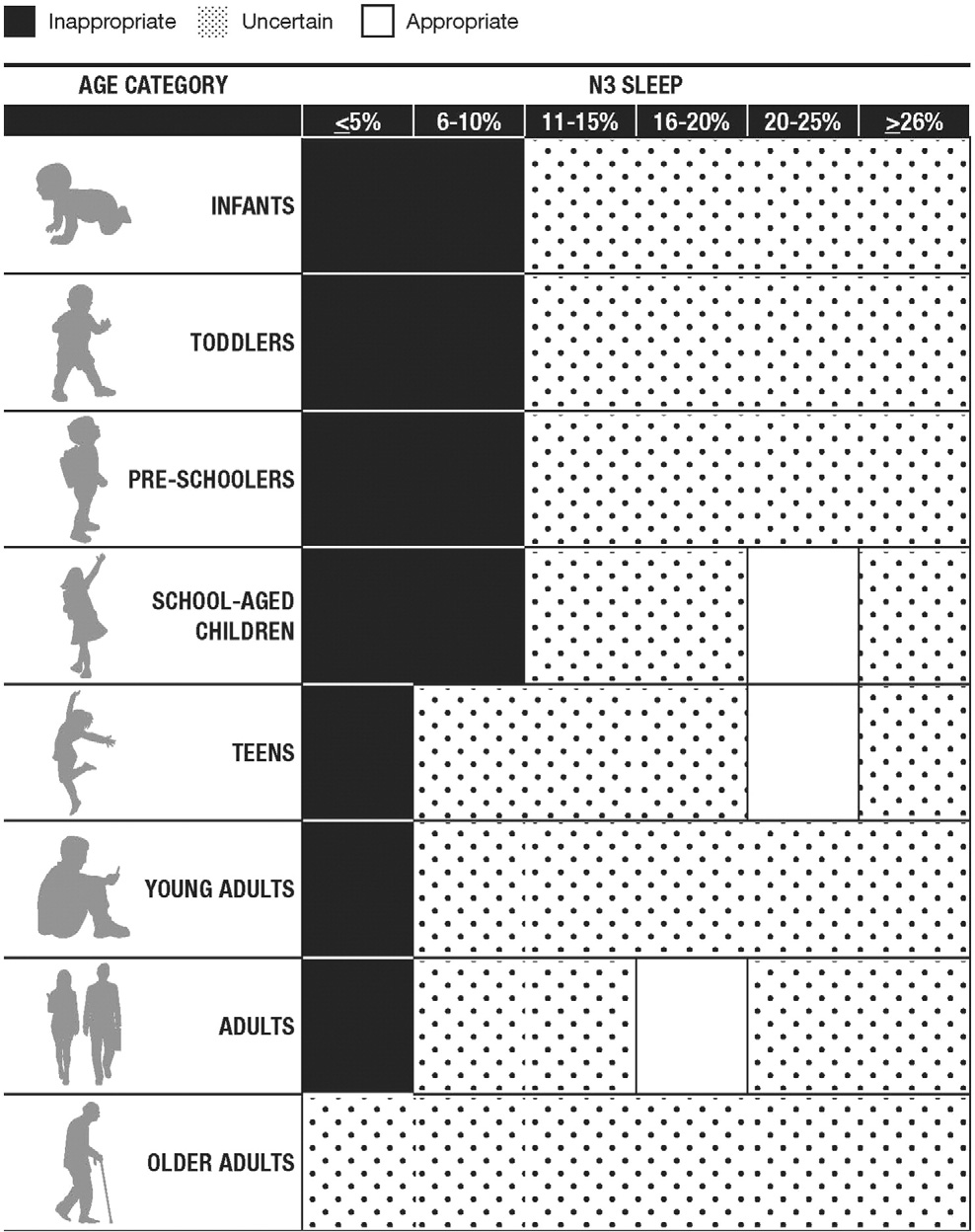
Figure: Expert consensus on the proportion of deep sleep across age groups. White indicates a proportion considered appropriate as an indicator of good sleep quality; dotted areas indicate uncertainty or disagreement; black indicates a proportion considered inappropriate as an indicator of good sleep quality.
Reference: National Sleep Foundation’s sleep quality recommendations: first report
Which Habits Can Affect Deep Sleep?
Drinking large amounts of coffee or strong tea.
Drinking alcohol before bed.
Doing vigorous exercise before bed.
Eating a diet high in saturated fat and low in dietary fiber.
How to Get More Deep Sleep
Start by keeping a regular sleep schedule and getting enough sleep. Then choose one or two of the following changes to try.
1. Keep a Consistent Sleep Schedule
Allow enough time for sleep: Plan your evening activities accordingly, and go to bed when you feel sleepy.
Wake up at a consistent time: Try to keep the same wake-up time on weekends, too.
2. Adjust Your Daily Habits
Adjust what you eat and drink: Avoid overeating at dinner, cut back on coffee and strong tea, and avoid alcohol before bed.
Exercise moderately: Choose activities such as walking or cycling. If exercising near bedtime leaves you feeling stimulated, move it earlier in the day.
Take a warm shower or bath: Aim for one to two hours before bed, using water that feels comfortably warm rather than hot.
Cut back on scrolling: Put your phone away 30 minutes before bed so it does not push your bedtime later.
3. Relax with Sleepal
Breathing exercises: Follow Sleepal's guided breathing to relax your body and mind.
Automatic wind-down: Let light and sound help you relax and drift off. They turn off automatically once you fall asleep.
4. Improve Your Sleep Environment
Sleep environment: Use Sleepal's analysis of your bedroom environment to adjust temperature, humidity, noise, and light, creating better conditions for deep sleep.
Share Article

At Sleepal, our mission is to awaken your potential through better sleep, naturally. We believe great technology should care for you, not complicate your life. Working quietly from your bedside, Sleepal helps you understand your sleep, wind down, and wake up gently.
Be First To Know
Subscribe for top stories, news and tips on how to transform your business with Sleepal.